Bookla: From B2C Marketplace to B2B SaaS
Client
Bookla
Role
Product Designer
Date
2024
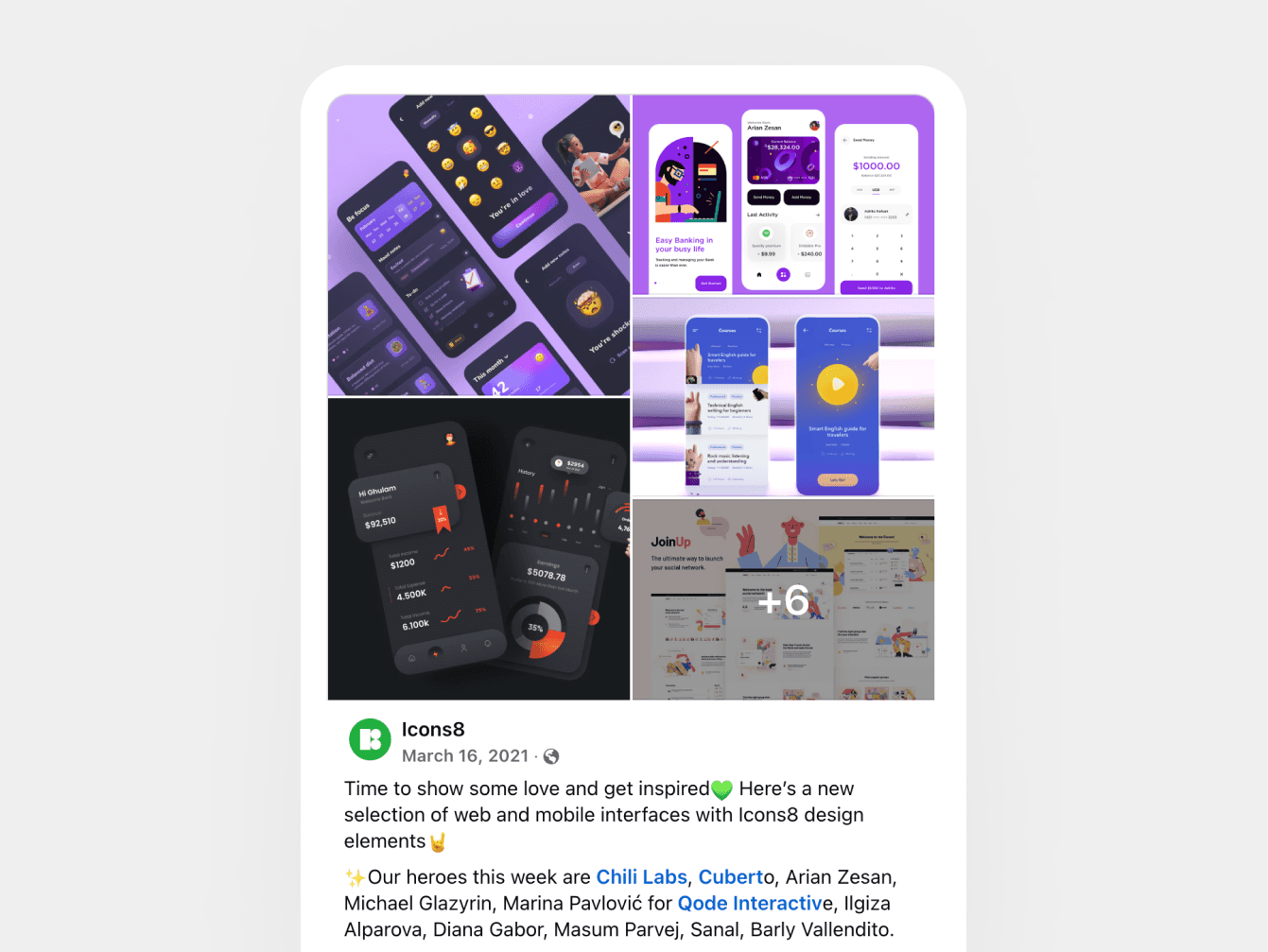
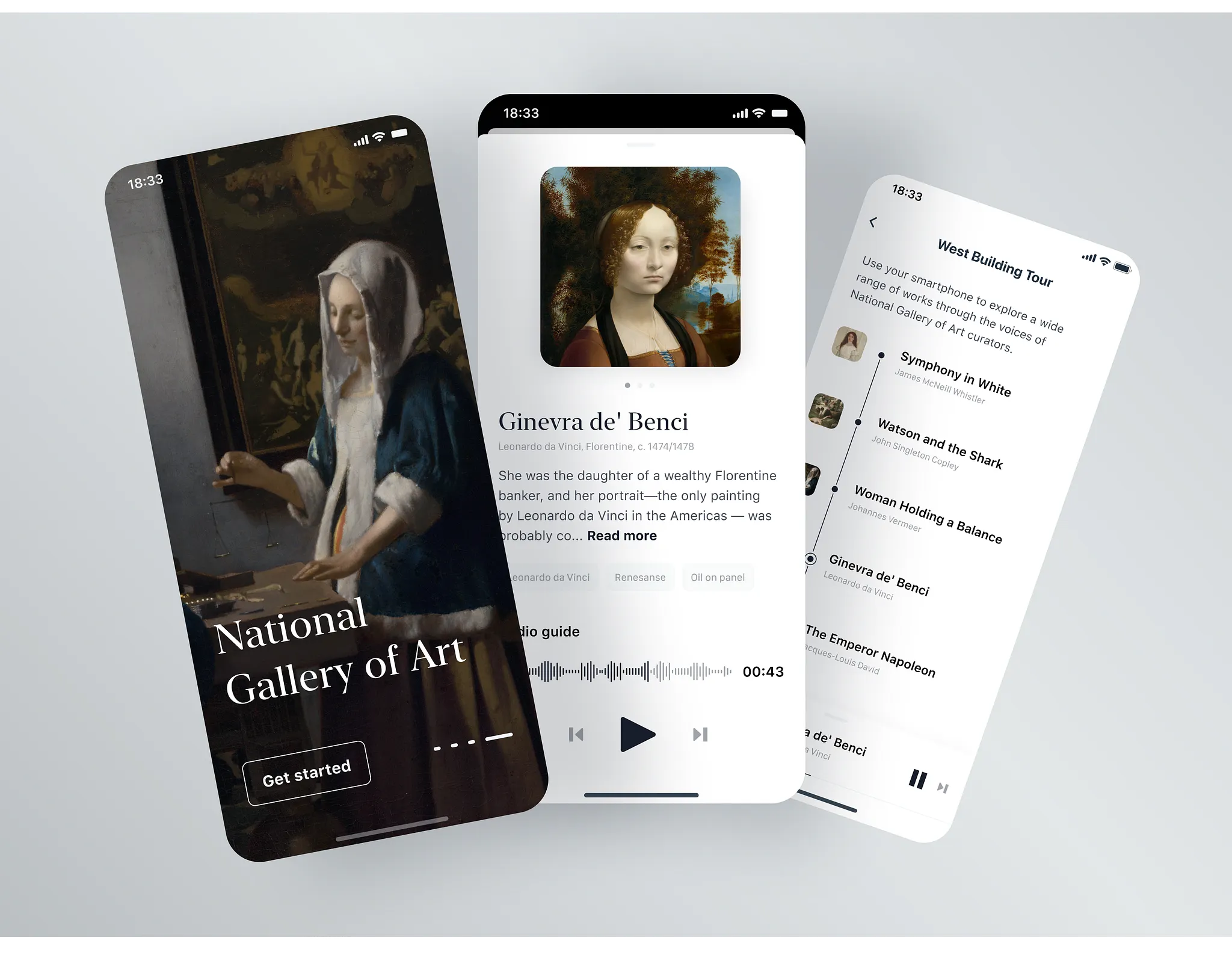
Bookla started as a B2C marketplace for booking services. See 'Bookla' Case. But when scaling to new markets like Lithuania and Spain, it became clear: growth wasn’t sustainable. Customer acquisition was expensive, competition was tough, and revenue wasn’t meeting expectations. It needed a pivot — a smarter way to scale.
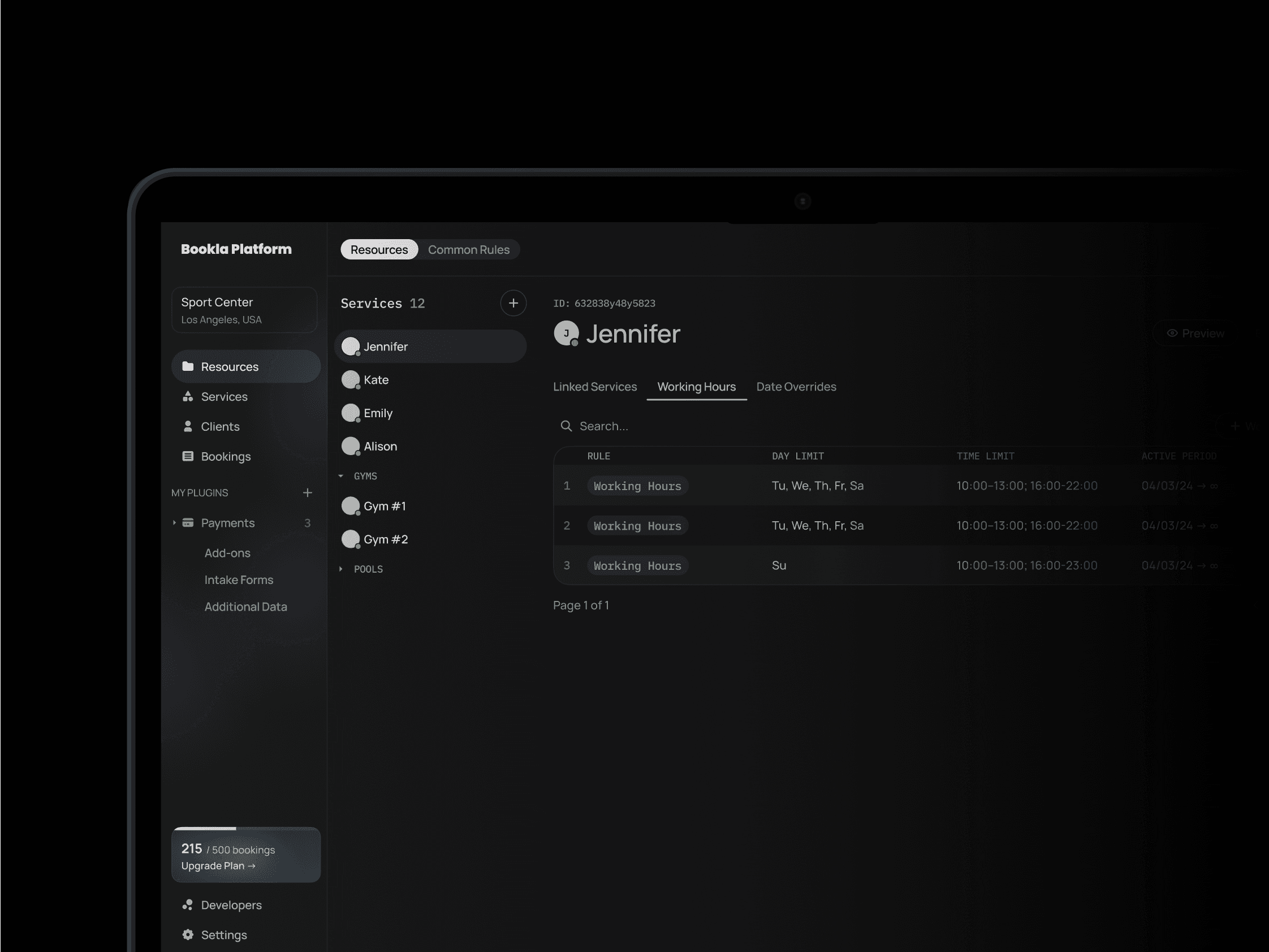
Instead of chasing individual users, we decided to empower businesses. The result? Bookla Platform — a white-label SaaS solution where companies could build their own branded booking systems, integrate through API, and extend functionality with plugins.
And it caught the attention of Webflow.
Bookla
• Businesses can join and manage appointments within the system.
Bookla Platform
• A white-label SaaS solution for businesses that want their own branded booking system.
• Companies can integrate expand the solution like their need with plugins.
My Role
• Owned the entire product design process, from vision to release.
• Defined MVP to create a compelling first version.
• Designed the UI and UX, using Chakra UI for flexibility and scalability.
• Collaborated closely with the founder-developer to shape the product vision.
• Led the user testing and integrated feedback to refine the platform.
• Designed and launched the first-ever plugin for complex bookings in Framer.
Team
• Product Designer
• Founder & Developer
Business Problem
Bookla faced difficulties in scaling its product in international markets like Lithuania and Spain which didn’t bring in enough revenue. Expanding required a lot of investment, making the growth model unsustainable.
It needed a scalable, flexible, and developer-friendly solution.
And we decided to take a risk and to rethink the existing solution, create the new one. The product that would be easy to scale.
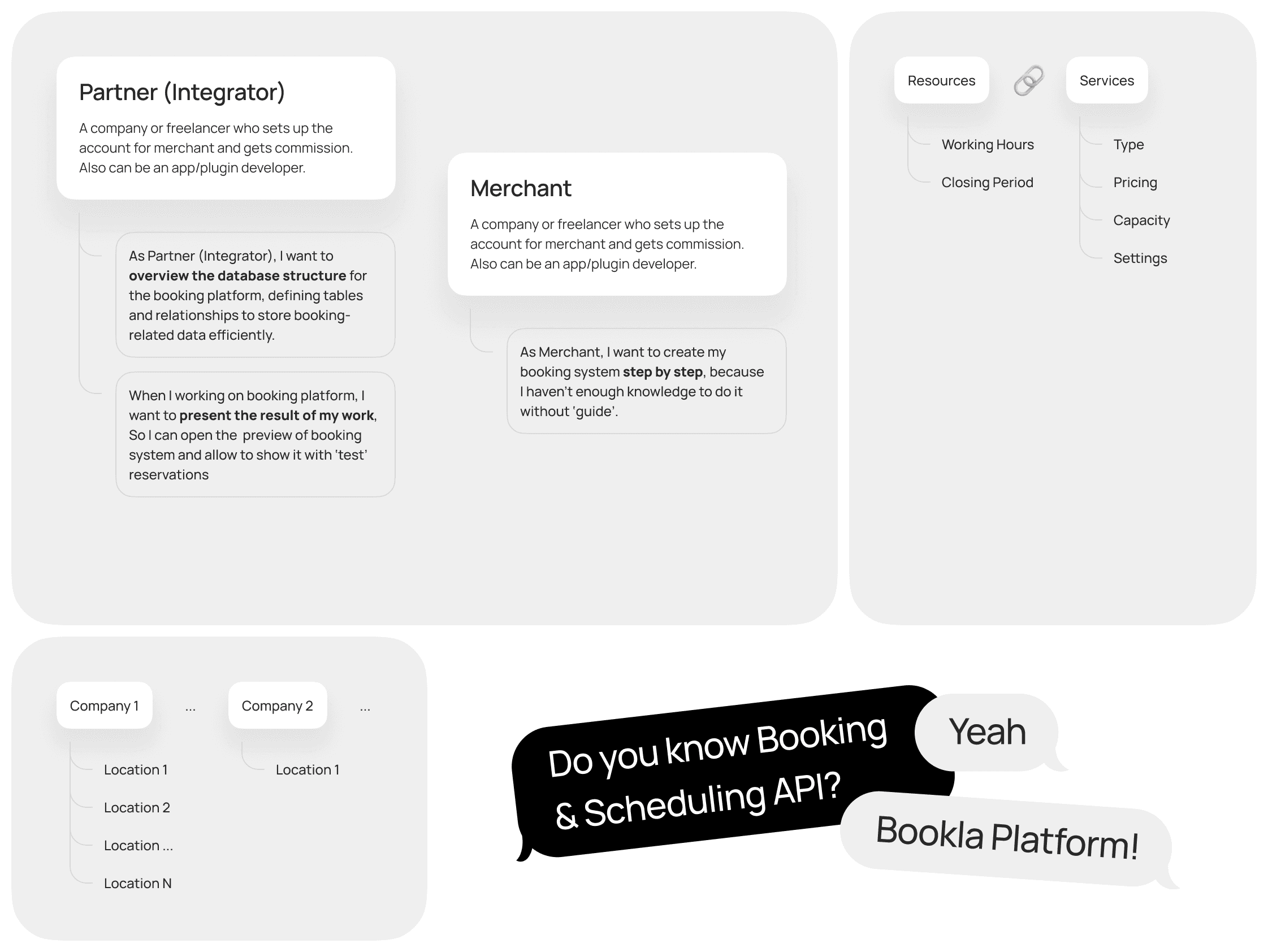
But how could we know how it should work? We need to go deeply into users' needs — specifically, those who are interested in using and purchasing booking functionality. Who are they?
Hypothesis
Ideas
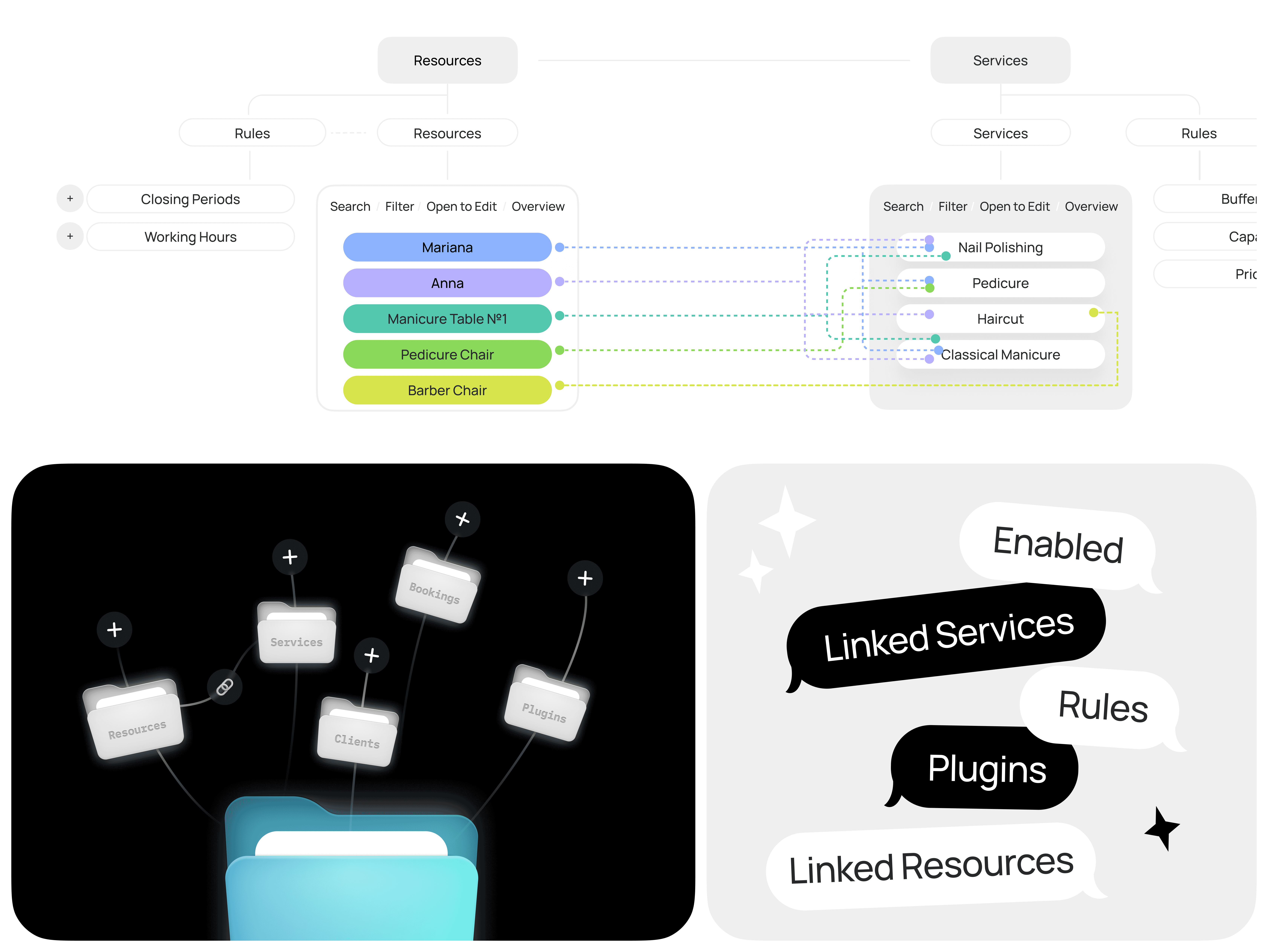
• A rule-based solution that could be expanded using plugins.
Process: From Idea to Reality
I anchored our UX strategy in Progressive Disclosure. It is a design technique that reduces the complexity of an interaction by providing interface layers that incrementally introduce content and function based on the customer's progress through the application.
Also I simplified the start using Chakra UI component library like a base.
Instead of cramming everything into version 1, I focused on what truly matters:
• Core booking logic (services, clients, resources).
• API for developers to integrate and customize.
• Plugins for scalability (payments, subscriptions, notifications).
• Real-world validation before a full-scale launch.
Prototyping and Early Feedback
I built a clickable prototype in Figma and ran tests inside teams, shown it to Bookla's clients to collect a feedback.
Biggest insight? Businesses needed a preview of service availability before committing to an integration. The feature was added before launch.
Real-World Validation
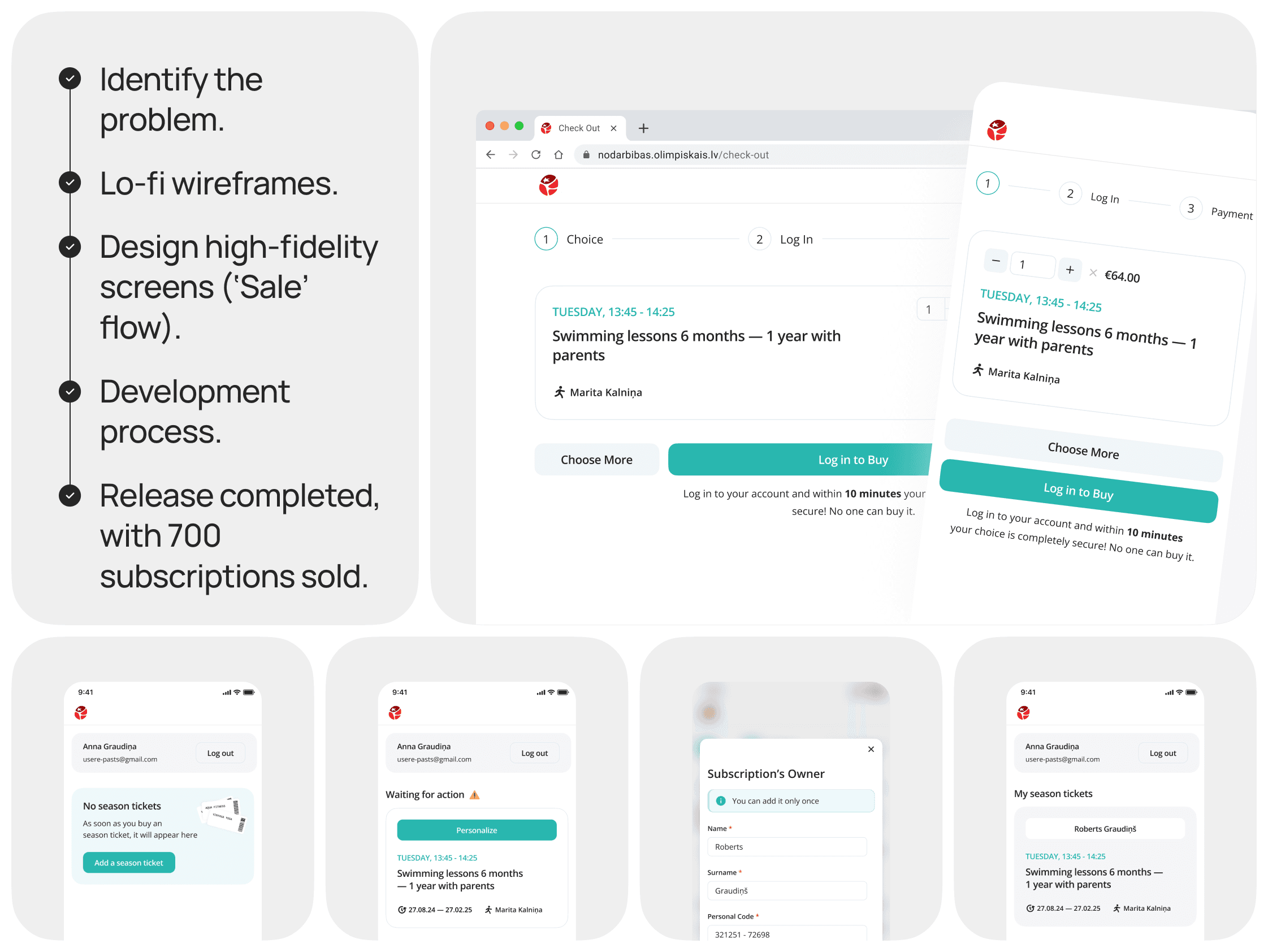
Our first real test came from Rimi Olimpiskais Centrs, but it was more than just selling 700 subscriptions.
Every August, parents rush to book limited sports memberships for their kids. And it was a headache for the company, because they managed it manually.
At the end Bookla Platform provided a full infrastructure for managing subscription sales and backend operations.
And I designed and was owned for:
Custom booking flow based for the client on their needs, that was build in unbelievable 3 weeks.
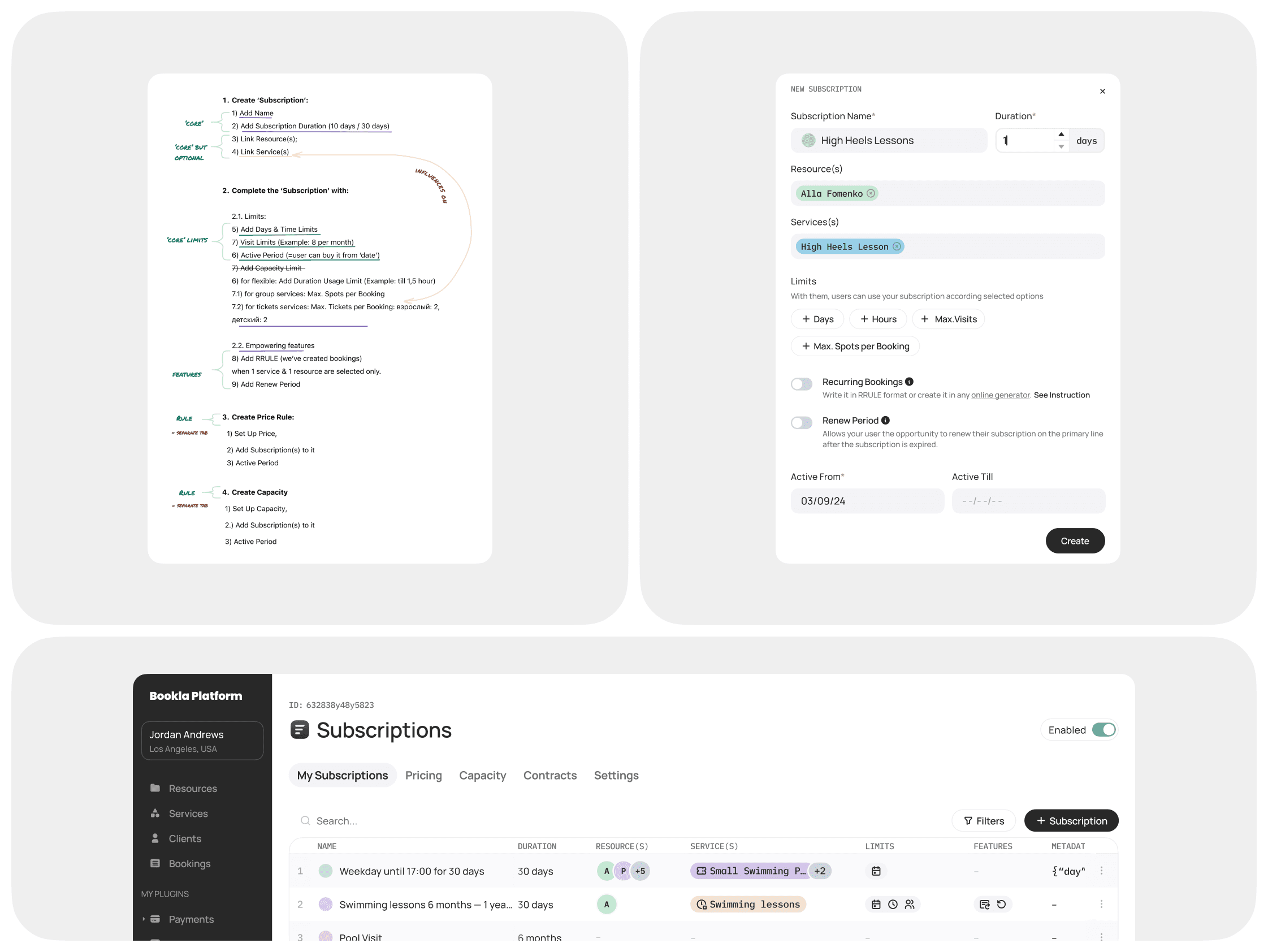
Subscription plugin for Bookla Platform.
The user acquisition funnel and Framer Pluggin
This confirmed our hypothesis:
Validation:
Defining MLP
The solution should allow to focus on scalability and flexibility.
At the end, the MLP consists from:
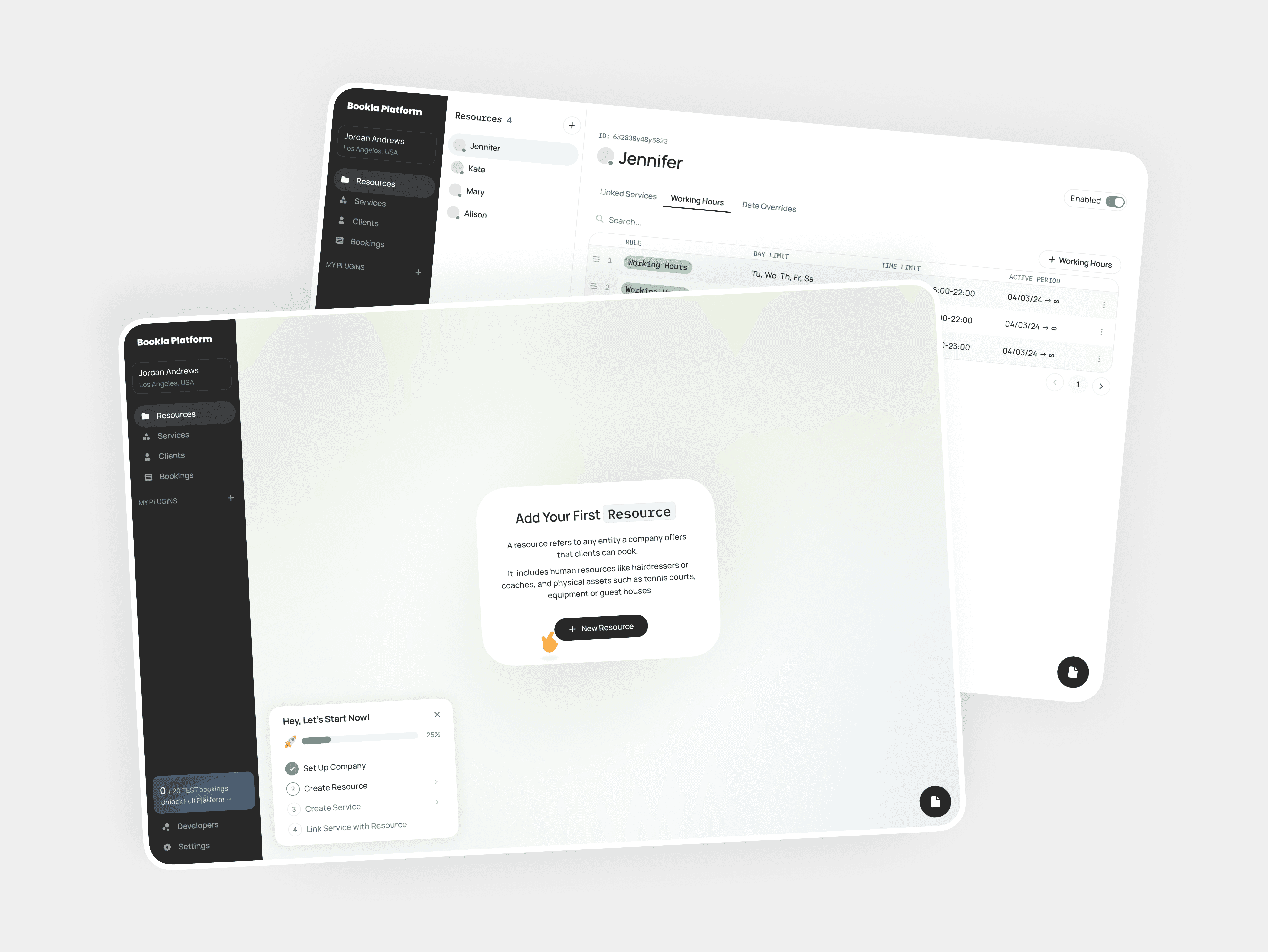
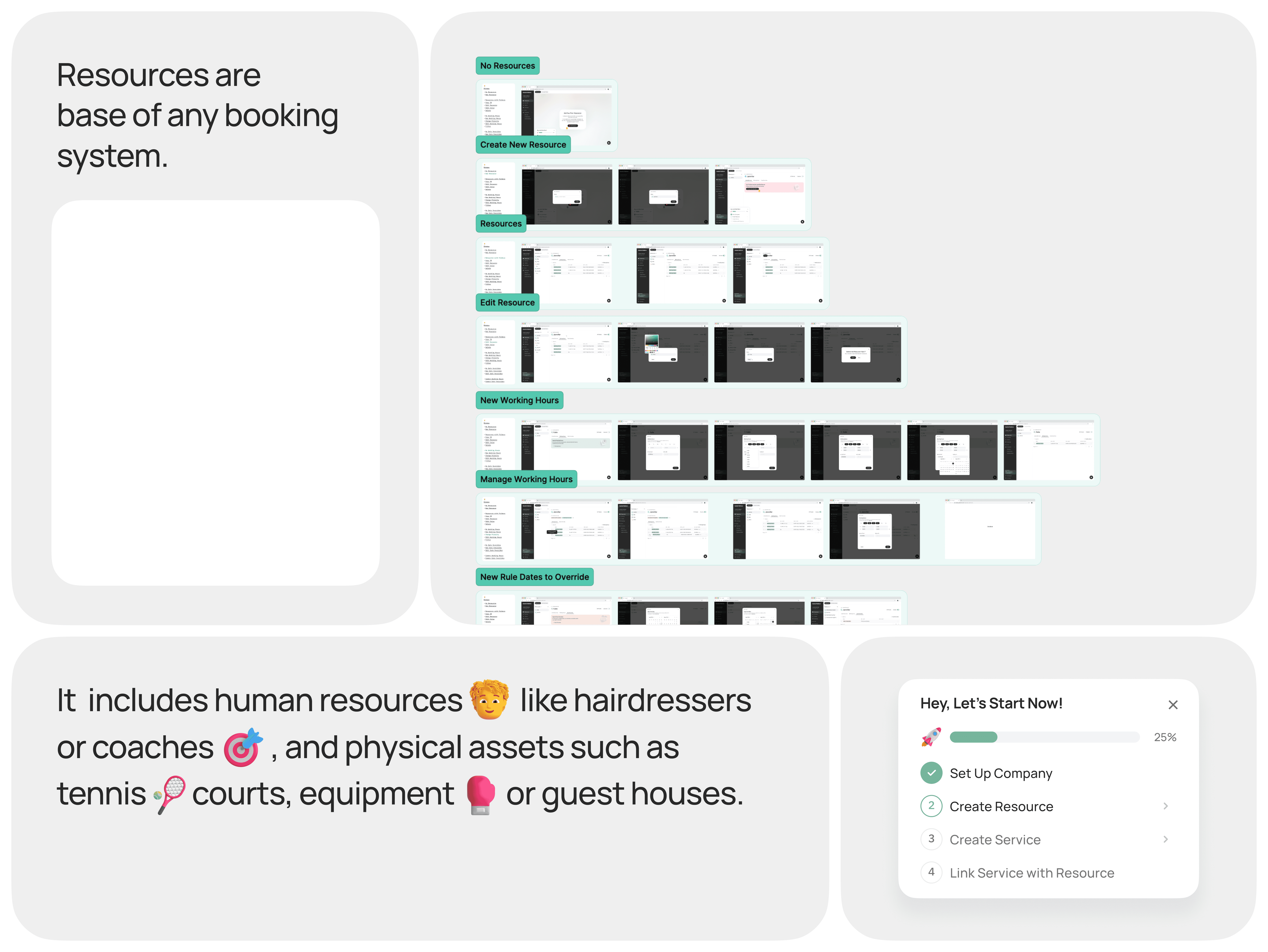
• Resources
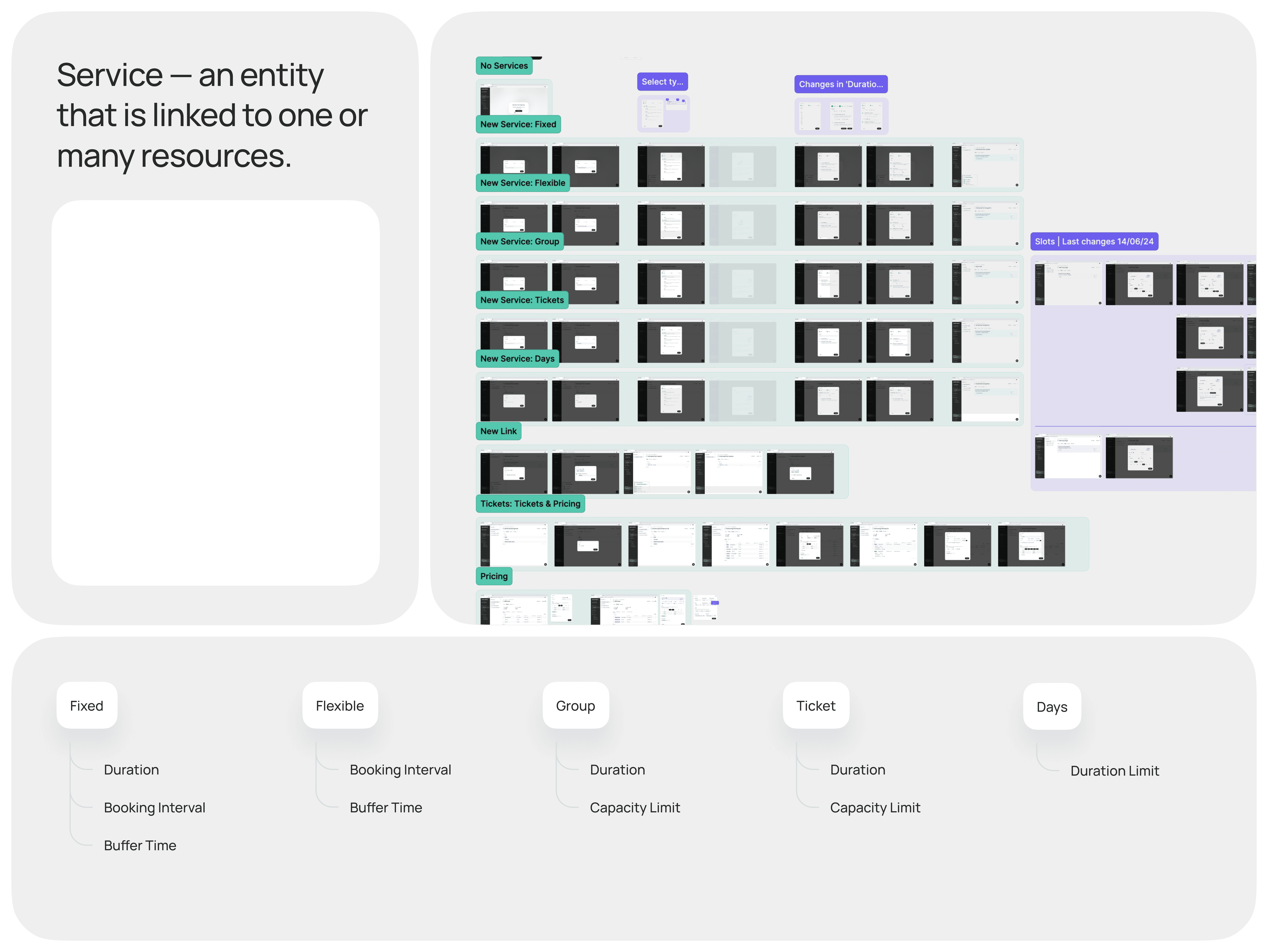
• Services
• Clients
• Bookings
• Documentation (Context )
• Plugins Preview
• Developers (API Keys & Webhooks)
Prototyping
To test the idea, we need real-time feedback from developers and potential clients.
So I focused on creating demo prototype to get the feedback before investing time and resources to the developing. I've decided to try new possibilities of Figma's prototypes, so I invested some time to go deep into advanced variables settings.
Unfortunately, I saw many errors in the console, and things broke. These issues were caused by changes in Figma. How do I know? I had close communication with Figma's support, and together we found a solution.
There were 2.5 months for the whole process.
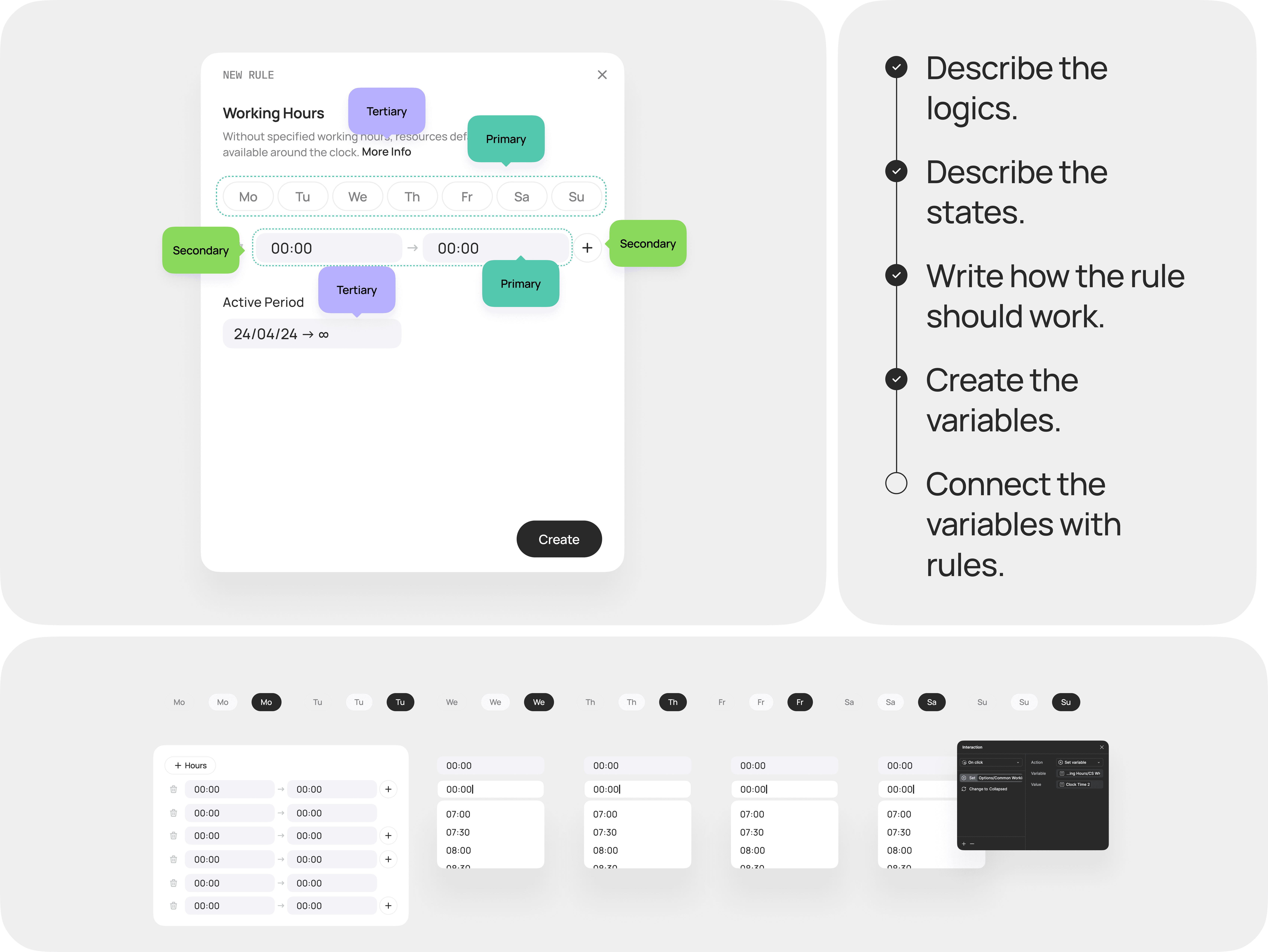
See Our Demo with the Prototype
Real-World Validation
The most impactful feedback came from BISS.ai, whose developers recommended the Bookla Platform to their client, Rimi Olimpiskais Centrs.
So I need to prepare 'sell offer' for them in 3 days.
I was a design owner for:
Custom booking flow based for the client on their needs, that was build in unbelievable 3 weeks.
Subscription plugin for Bookla Platform.
Result
In a day after start the 700 subscriptions were already sold. The client was impressed!
The user acquisition funnel and Framer Pluggin
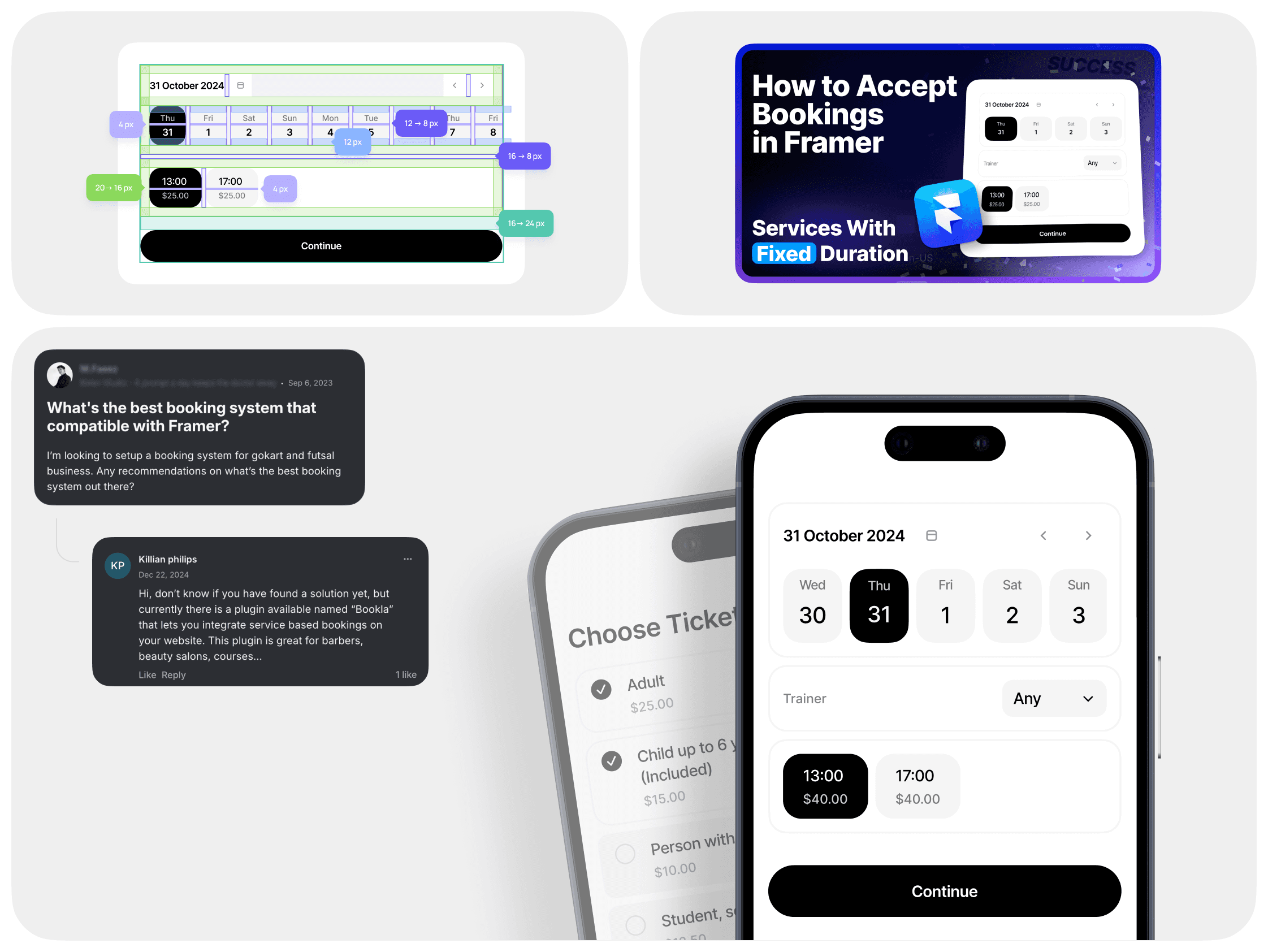
By scouring the Framer Community Discussion, we identified a gap in complex booking systems. So we decide to promote our platform by creating a free website template for a gym.
The first idea was to design in and build the 'booking' UI solution directly on Framer using custom code, but our developer discovered that integration into Framer was only possible via a separate plugin.
To validate the idea before investing time in developing the plugin, we gauged interest using a cost-effective method on Reddit Thread.
Interest was high, so I changed our design direction to create a solid, modular component that could cover a variety of booking needs.
Revenue
The booking component must be connected to our paid platform. This creates a revenue stream while driving user engagement.
Lead Generation Metrics
The plugin and tutorial videos generated an 80% increase in leads in 12 weeks compared to the previous six months period.
Market Validation
Webflow reached out and requested a similar solution, offering promotional support and access to their developer slack.
Key Results
The pivot confirmed strong market potential, creating the way for development and user acquisition growth. 🚀
Validated demand
for a scalable B2B booking platform.
Reflection
This project proved how pivoting a product can unlock entirely new business opportunities
Iterative approach allows to gather real-world feedback, adapt quickly, and ultimately generate a significant increase in leads.
The Bookla platform is now ready to scale.
I learned to:
• Audience alignment is a key. Understanding where our audience is and what they need is crucial.
• Our initial pricing did not align with Framer’s audience; we’re adapting for the upcoming Webflow release.
• How to validate ideas before development: Figma prototypes saved us time and resources.
• How modular design enables scalability: plugins allowed us to expand fast.
• Why real-world testing matters: 700+ bookings proved our approach worked.